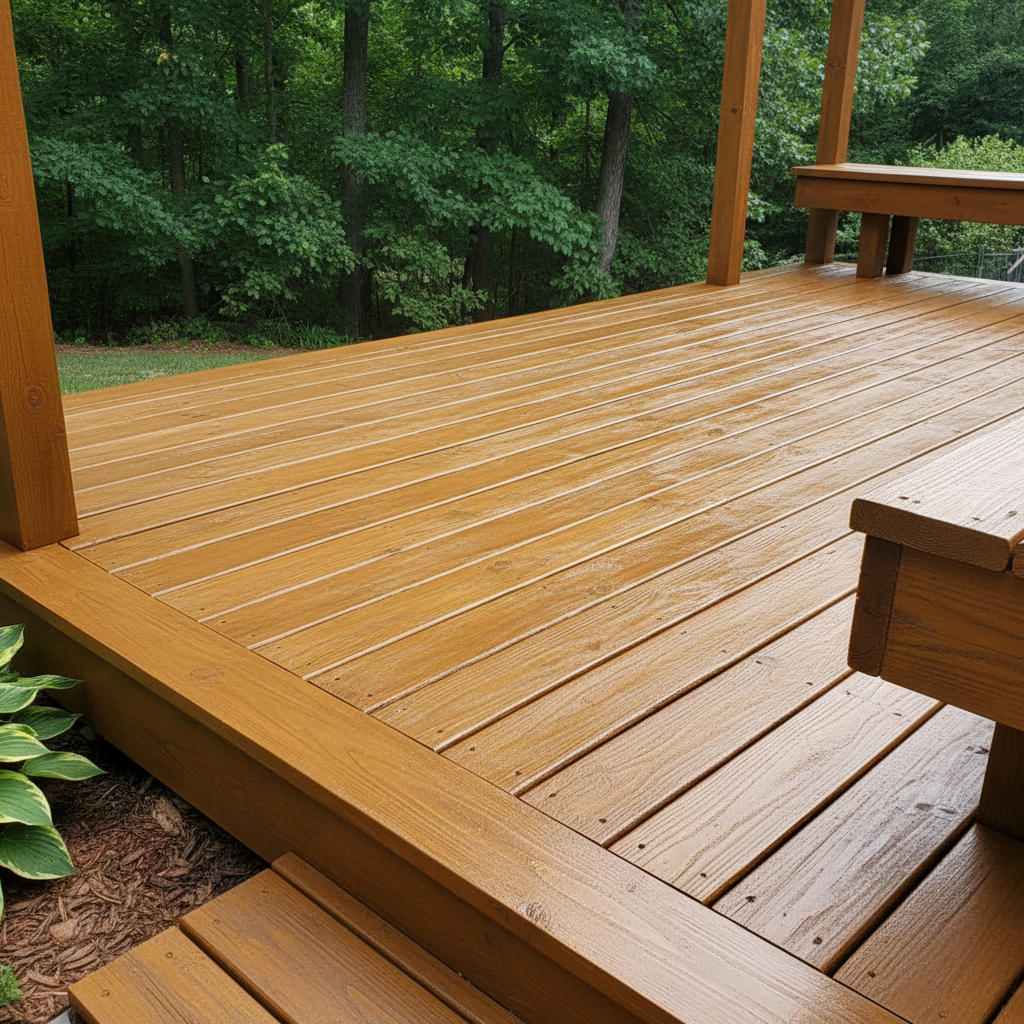
Is your wooden deck looking a little tired after surviving another round of East Tennessee humidity and pollen? Staining or painting your outdoor living space is one of the best ways to protect the wood, but Deck Staining and Painting is not a project to rush. Here is what you need to know before you crack open a gallon of stain, what to expect during the grind, and how to figure out whether you should tackle Deck Staining and Painting this weekend or call in some backup in Knoxville, TN.
Before You Start: Prep Work Makes or Breaks the Job
Nobody wants to spend a whole Saturday working hard only to watch their new stain peel off by next spring. The secret to a long-lasting finish for Deck Staining and Painting happens long before you dip a brush. Here is the checklist:
- Check the weather forecast for a solid window of dry days with temperatures staying between 50 and 85 degrees.
- Run the water drop test on your boards — if the water soaks in instead of beading up, your wood is ready for a drink.
- Clear off all the furniture, planters, and grill equipment so you have a blank slate.
Cleaning is next. You have to get rid of dirt, mildew, and that gray, weathered wood layer. A pressure washer is often rented for Deck Staining and Painting, but you have to be careful. If you hold that nozzle too close to soft pine or pressure-treated lumber, you will gouge the wood grain and leave permanent scars. Keep the pressure moderate and use a proper deck cleaner for Deck Staining and Painting.
During the Project: Staining vs. Painting
Once the wood is completely dry — and it is important to give it at least 48 hours to dry out after washing — you can apply your coating. Here is where homeowners often get stuck choosing between paint and stain for Deck Staining and Painting.
Paint hides everything, but it creates a film layer. When moisture inevitably gets trapped underneath that paint film — especially with our humid Knoxville summers and winter temperature swings — it will bubble and peel. Scraping and repainting a peeling deck during Deck Staining and Painting is miserable work.
That is why Pacific Deck Company usually leans toward a high-quality semi-transparent or penetrating oil-based stain for Deck Staining and Painting. It sinks right into the wood fibers instead of sitting on top. It moves with the wood as it expands and contracts through the seasons without cracking open.
When you are actually putting it down, work in manageable sections. Do a few boards at a time from end to end to avoid lap marks. If you are using a sprayer to speed things up, make sure you follow right behind it with a brush or pad to push that product deep into the grain during Deck Staining and Painting.
After the Finish: Maintenance and Curing
Give your deck plenty of time to cure before dragging heavy furniture back across it or hosting a neighborhood cookout. Read the label on your specific product, but usually, you want to wait at least 48 hours for light foot traffic after Deck Staining and Painting.
Keep an eye on high-traffic paths and areas exposed to heavy rain runoff. Keeping organic debris like wet leaves swept off your boards during the fall will add years to the life of your fresh coat of Deck Staining and Painting.
DIY vs. Calling a Pro
Can you do Deck Staining and Painting yourself? Absolutely. If you have a standard single-level ground deck, a free weekend, and patience for kneeling on hard wood boards, DIY will save you some cash. It is honest, physical labor.
However, homeowners should call Pacific Deck Company for Deck Staining and Painting in Knoxville, TN if the project involves complex multi-level stairs, extensive board replacements due to rot, or if the deck is massive and there is simply no free time to spend three days prepping and coating. For Knoxville homes, Pacific Deck Company is here for all your Deck Staining and Painting needs.