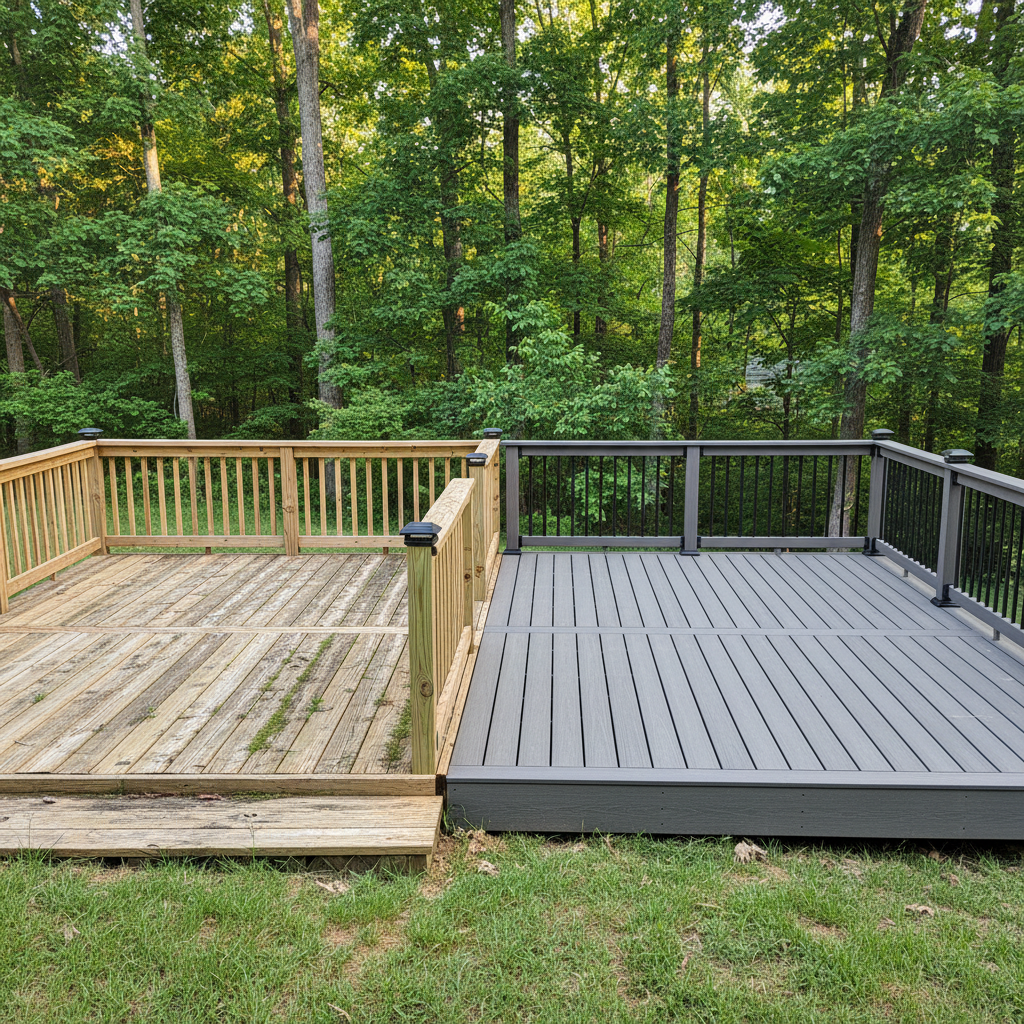
Alright, so you're thinking about composite decking. Good call. You want something that doesn't need much work, holds up well, and looks sharp. But then you start looking around, and suddenly you're hearing about 'capped' and 'uncapped' composite. It can get a little confusing, right? No worries, I'm here to clear it up for you, plain and simple.
What's the Big Deal with Composite Anyway?
First off, let's just quickly remember why composite decks got so popular in the first place. Wood decks, especially here in Knoxville with our steamy summers and wet winters, really take a beating. They rot, they splinter, they fade, they get moldy, and you're staining or sealing them every couple of years. It's a real pain. Composite came along promising to fix all that, and for the most part, it does. It's made from a mix of wood fibers and recycled plastic, so it stands up to rot and bugs, and it won't give you splinters.
Uncapped Composite: The Original Version
This was the first kind of composite decking out there. Think of it as the original. It's still a big improvement over wood when it comes to upkeep. You won't be staining it, and it won't rot. But 'uncapped' means exactly what it sounds like: the main material (wood fibers and plastic) is open to the weather.
- Cost: Generally, uncapped composite will cost you less upfront. It's the more budget-friendly composite choice.
- Durability: It's tough, absolutely. It won't rot or get eaten by termites. But because those wood fibers are exposed, it soaks up moisture more easily. This can lead to mildew and staining, especially in shaded spots or where leaves tend to pile up. You'll also notice more fading over time compared to capped boards.
- Maintenance: Still way less than wood, thank goodness. You won't be sanding or staining. But you will have to clean it more often to stop mold and mildew, which can really take hold in our climate. If you've got a lot of trees around your place, like many folks do in Sequoyah Hills, you'll be hosing it down pretty regularly.
- Appearance: It looks good when it's new, but it tends to fade and get duller over time. The colors aren't as bright or as consistent as what you'd get with capped options.
Capped Composite: The Next Step Up
This is when composite decking really hit its stride. Capped composite boards have a protective polymer shell (that's the 'cap') that completely covers the composite core. Imagine it like a hard, super durable plastic coating all around the board.
- Cost: This is usually more expensive than uncapped composite. You're paying for that extra layer of protection and the smart engineering behind it.
- Durability: This is where capped composite truly shines. That cap acts like armor, you know? It's super resistant to scratches, fading, staining, and mold. It sheds moisture, so you won't get that mildew buildup as easily. It's built to handle whatever the elements throw at it, including our intense summer sun and the freeze-thaw cycles we get here.
- Maintenance: This is about as close to maintenance-free as you're going to get with a deck. A simple wash with soap and water now and then is usually all it needs. You won't be scrubbing mold spots or worrying about spilled BBQ sauce leaving a permanent mark.
- Appearance: Capped composite boards come in a much wider range of colors and really convincing wood grain patterns. The colors stay vibrant longer, and they just look more high-end. They've really nailed the aesthetics with these, haven't they?
So, Which One Should You Pick for Knoxville?
Look, I've built a lot of decks around here with Pacific Deck Company. I've seen what our weather does to materials. Given our climate – the humidity, the rain, the strong sun, and the general dampness that can settle in – my clear recommendation for most Knoxville homeowners is capped composite decking.
While it costs a bit more upfront, the long-term benefits are huge. You're going to spend less time cleaning and maintaining it, and it's going to look better for a lot longer. That means more time enjoying your deck with friends and family, and less time working on it. The resistance to fading and staining alone makes it worth the investment here. You don't want to spend good money on a deck only to have it look tired and faded after a few years because our environment is just too harsh for uncapped boards to truly thrive without constant attention.
If budget is an absolute deal-breaker, uncapped composite is still a decent option over wood, but you need to go into it knowing you'll have to put in more effort to keep it looking good. For the best return on your investment and the least amount of hassle, capped composite is definitely the way to go for a deck that truly lasts and looks great in our East Tennessee conditions.